
There’s a gold rush happening in artificial intelligence — and the major technology companies have stopped merely watching it unfold. They’re actively trying to hand out the shovels.
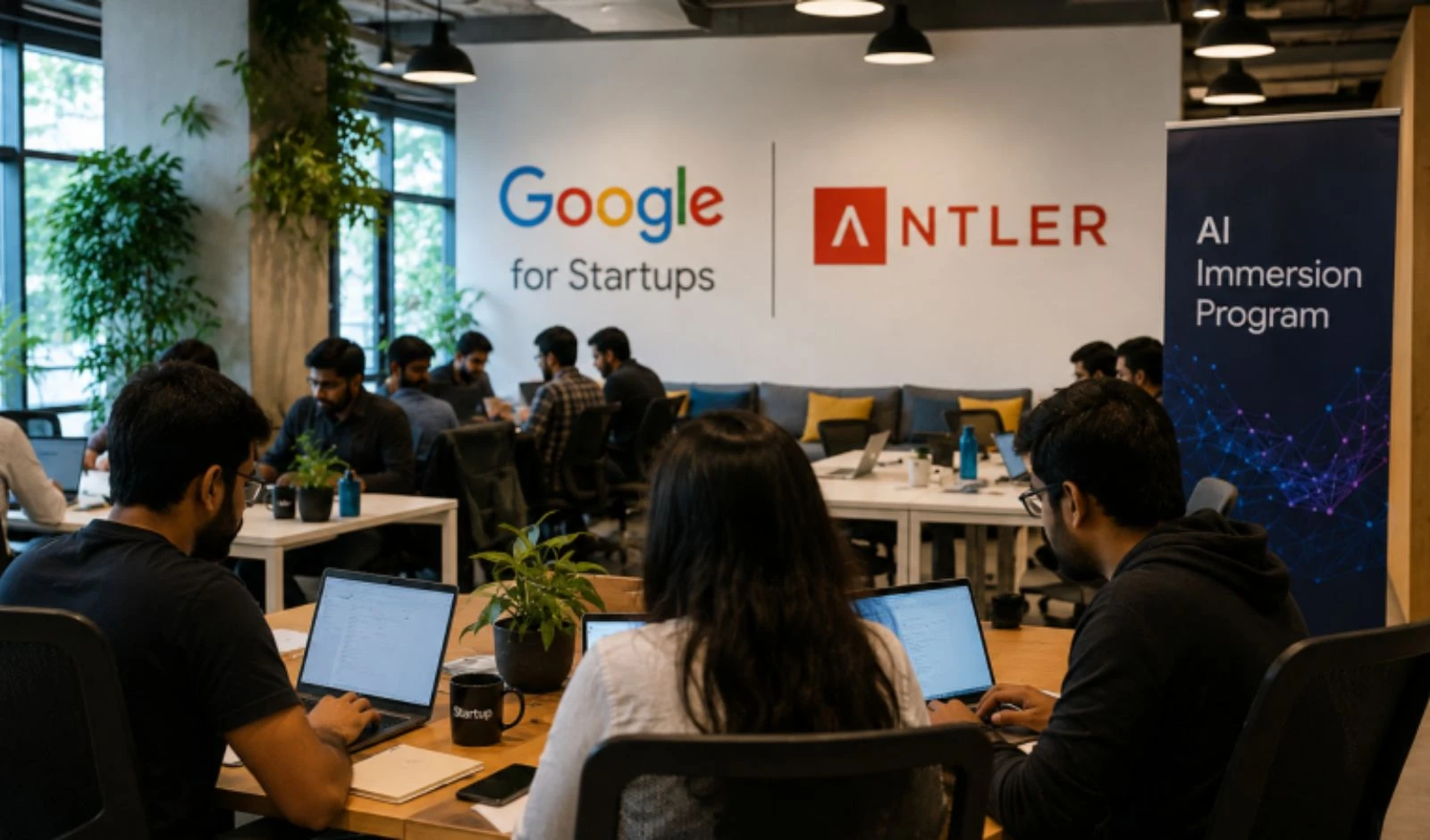
Google’s latest move makes that strategy explicit. The company has announced a sweeping partnership with Antler, one of the world’s most active early-stage venture capital firms, targeting an ambitious goal: identify, support, and help launch the companies of 5,000 AI founders.
It is, by almost any measure, one of the most ambitious commitments to early-stage AI entrepreneurship that a major technology platform has made to date. And it raises a question that will matter enormously to investors, founders, and technologists over the coming years: in a world where artificial intelligence is becoming the default substrate of new business creation, which company gets to be the platform underneath it all?
What Google and Antler Are Actually Building Together
At its core, the Google-Antler initiative is a structured founder support program — but the scale and the partner involved give it a different weight than a typical accelerator announcement.
Antler operates across more than 30 cities globally, running cohorts of pre-company founders who join before they’ve even settled on an idea. The firm’s model is distinctive: it bets on people before it bets on products, providing early capital, co-founder matching, and hands-on support during the formation stage. It has backed thousands of startups since its founding in 2017, spanning industries from fintech to climate tech to enterprise software.
Pairing that model with Google’s AI technology stack is a logical combination, even if the ambition behind it is anything but modest.
Founders participating in the program will receive access to Google AI technologies, including its Gemini model family and the broader suite of tools available through Google Cloud. They’ll also get structured training, technical mentorship, startup-building resources, and access to a network of fellow founders and Google’s own technical teams.
For a founder at the earliest possible stage — pre-product, sometimes pre-team — that bundle of resources represents something genuinely valuable: a credible on-ramp into the AI development ecosystem, backed by one of the few organizations with the infrastructure to support it at scale.
Why Google Is Doing This Now
The timing of this initiative is not accidental. It reflects a competitive reality that has been building for several years and is now approaching something close to urgency.
Microsoft’s deep partnership with OpenAI, sealed with a reported $13 billion investment commitment, gave the company a head start in embedding AI capabilities into enterprise software and developer tools. Azure became the default cloud home for OpenAI’s technology, and by extension, a gravitational center for businesses building on top of GPT models.
Amazon Web Services moved aggressively to position itself as an infrastructure-neutral AI platform, backing Anthropic with a multi-billion dollar investment while simultaneously expanding its Bedrock platform to offer access to multiple AI models. The message to developers was clear: build here, choose your model, scale on our infrastructure.
OpenAI itself has been building out its own developer ecosystem, with API access, a growing marketplace of GPT-powered applications, and an increasing focus on making its technology accessible to companies at every stage of development.
Into this landscape, Google has launched the Google-Antler program — and the subtext of the announcement is unmistakable. Google wants AI founders to build on Google. It wants Gemini to be the model they reach for first. It wants Google Cloud to be where their applications run. And it understands that the best time to cultivate that loyalty is before those founders have made any of those decisions.
The Startup Ecosystem Has Already Changed — Google Is Catching Up to That Reality
To understand why a program like this matters, it helps to understand how dramatically the conditions for AI entrepreneurship have shifted in just a few years.
Launching an AI company used to require either deep technical expertise in machine learning research, access to expensive GPU clusters, or both. The barrier to entry was high enough that most AI startups were built by former researchers from large labs or engineers with specialized backgrounds.
That barrier has not disappeared, but it has lowered significantly. Foundation models from Google, OpenAI, Anthropic, and others have made it possible for a founder to build a sophisticated AI application without training a model from scratch. Cloud compute, while still expensive, is more accessible than ever. Open-source tools have proliferated. And the playbook for going from idea to product in AI has become increasingly legible, even to founders without machine learning PhDs.
The result has been an explosion of AI startup formation. Venture capital data from PitchBook and other tracking firms shows that AI and ML companies accounted for a disproportionate — and growing — share of startup funding globally in 2024 and 2025, with early-stage investment holding up even as later-stage funding markets experienced turbulence.
Crunchbase data has consistently shown AI appearing as a category in an increasing percentage of new company formations. Founders are not just building AI features into existing business models; they’re building companies where AI is the core product, the differentiator, and the primary competitive moat.
Google and Antler’s program is designed to meet founders exactly where this shift has taken them — at the point of formation, when decisions about tools, infrastructure, and development partners are still wide open.
What This Means for Early-Stage Founders
For an entrepreneur at the earliest stage of building an AI company, the most honest summary of the Google-Antler program’s value is this: it dramatically compresses the time and cost required to get from idea to functioning product.
Access to Google AI technologies means not starting from zero on infrastructure. Training and mentorship from experienced builders means not making avoidable early mistakes. Networking opportunities — particularly in a cohort alongside thousands of other AI founders — means access to the kind of peer community that has historically been a significant predictor of startup success.
The Infrastructure Advantage
One of the most underappreciated challenges for early-stage AI startups is infrastructure cost. Running large language model inference is expensive. Fine-tuning models requires GPU time that can quickly become prohibitive. For a pre-revenue startup managing a small seed round, compute costs can eat a dangerous percentage of runway before the product is even in customers’ hands.
Access to Google Cloud resources through a structured program like this can meaningfully extend that runway, giving founders more time to find product-market fit before they hit the wall.
The Credibility Signal
There’s also a softer but real benefit: association with Google and Antler carries credibility in fundraising conversations. A founder who has gone through a structured program with access to Google’s technology and Antler’s network arrives at a seed pitch with a more legible story than one who has been building in isolation. That matters in a funding environment where investors are still learning to evaluate early-stage AI companies.
The Challenges This Program Doesn’t Solve
It would be a mistake to suggest that access to Google’s AI tools and Antler’s network is a guarantee of success — or even of a clear path to it.
AI startups face structural challenges that no accelerator program can fully address. The most pressing is differentiation: with so many founders building on the same foundation models, the risk of building something that a model update or a large company’s product expansion quickly commoditizes is real and growing. Investors and founders alike are wrestling with the question of what constitutes a durable competitive advantage in AI applications when the underlying technology is widely accessible.
Regulation is another growing variable. Across the United States, the European Union, and a growing number of other jurisdictions, AI-specific regulatory frameworks are taking shape. Founders building AI-powered products in healthcare, finance, education, or legal services face a compliance landscape that is still evolving — and that can impose significant costs and delays on companies without dedicated legal resources.
Talent remains competitive. Despite the democratization of AI development tools, experienced AI engineers and applied machine learning researchers are in high demand. A 5,000-founder cohort is only as strong as the teams those founders can assemble — and recruiting in AI remains a genuine challenge for companies that can’t compete with Big Tech on compensation.
The Bigger Race: Which Platform Wins the Loyalty of AI Founders?
Step back from the specifics of the Google-Antler program, and what you see is a pattern playing out across every major technology platform simultaneously.
Microsoft, through its GitHub ownership, Azure AI, and Copilot ecosystem, has positioned itself as the default home for developers building with AI in the enterprise. Amazon has embedded AI deeply into AWS while backing multiple foundational model providers. OpenAI is cultivating its own ecosystem through API partnerships and the ChatGPT plugin/GPT marketplace infrastructure. Anthropic has built a developer-focused reputation around Claude’s reliability, safety, and long-context capabilities.
Each of these companies understands something that is increasingly well-established in platform economics: developer communities, once formed, are sticky. The tools, workflows, APIs, and mental models that a founder adopts while building their first company tend to persist. Switching costs are real — not just technical, but cognitive and organizational.
Winning the loyalty of 5,000 AI founders, as Google is attempting to do through this initiative, is not just a near-term business development move. It is a long-term bet on who builds the next generation of AI companies, and on which infrastructure those companies choose to run on as they scale from startup to Series A to eventual unicorn.
Could AI Founder Programs Become the New Competitive Moat?
There’s a strategic argument to be made that initiatives like the Google-Antler program represent a new category of competitive advantage — one that operates on a longer time horizon than product features or pricing.
Traditional tech platform competition has been fought on the basis of capabilities: which cloud is fastest, which API is most reliable, which development environment is most productive. Those battles matter, and they continue.
But the battle for AI developer mindshare has added a new dimension: which ecosystem feels most supportive, most accessible, and most genuinely invested in founders’ success at the earliest stage?
A startup that gets meaningful help from Google when it has nothing — no product, no revenue, no team — is likely to remember that when it’s making infrastructure decisions at scale. That’s not irrational loyalty; it’s rational relationship-building, viewed from the founder’s side.
The Next Decade: How AI Founder Programs Could Shape Innovation
Looking forward across the next ten years, the implications of programs like Google and Antler’s initiative extend well beyond any single cohort of founders.
We are at the beginning of what many technologists and economists believe will be a prolonged period of AI-driven business model reinvention — spanning healthcare, education, financial services, manufacturing, logistics, legal services, and virtually every other sector of the global economy. The companies that will lead that reinvention are, in many cases, not yet formed. Their founders may be in university today, or finishing a stint at a larger company, or working on an idea they haven’t yet committed to full-time.
Programs that reach those founders early, provide them with real resources, and embed them in a Google-aligned ecosystem are making a bet on a specific vision of how innovation compounds over time: through networks, through shared infrastructure, and through the relationships formed in communities of practice.
If that bet pays off — if even a fraction of the 5,000 founders in this cohort go on to build companies that matter — the Google-Antler program will look, in retrospect, like one of the more consequential startup investments Google ever made.
That outcome is not guaranteed. No accelerator program, however well-resourced, can manufacture the combination of timing, talent, and market insight that produces a breakout company. But it can improve the odds. And in a race where the prize is influence over the trajectory of artificial intelligence itself, improving the odds is worth an enormous amount.
Google knows that. So do Microsoft, Amazon, OpenAI, and Anthropic. The real competition in AI may not be between models at all. It may be between the ecosystems those models inhabit — and the founders who choose to build inside them.
6. FAQ Section
Q:1. What is the Google and Antler AI Startup Program?
It’s a joint initiative between Google and global early-stage VC firm Antler designed to support 5,000 founders building AI-powered businesses. The program provides access to Google AI technologies, training, technical mentorship, startup-building resources, and networking opportunities.
Q: 2.Who is Antler?
Antler is a global early-stage venture capital firm that operates across more than 30 cities worldwide. It is known for investing in founders before they’ve even formed a company, supporting team formation, ideation, and early product development alongside capital.
Q: 3.What AI technologies will founders access through this program?
Participants are expected to gain access to Google’s AI technology suite, including the Gemini model family and tools available through Google Cloud’s AI infrastructure.
Q: 4.Who should apply to this program?
The program is aimed at early-stage founders — particularly those at the pre-product or pre-company stage — who are building businesses where AI is a core component. It’s relevant for entrepreneurs across a wide range of industries and technical backgrounds.