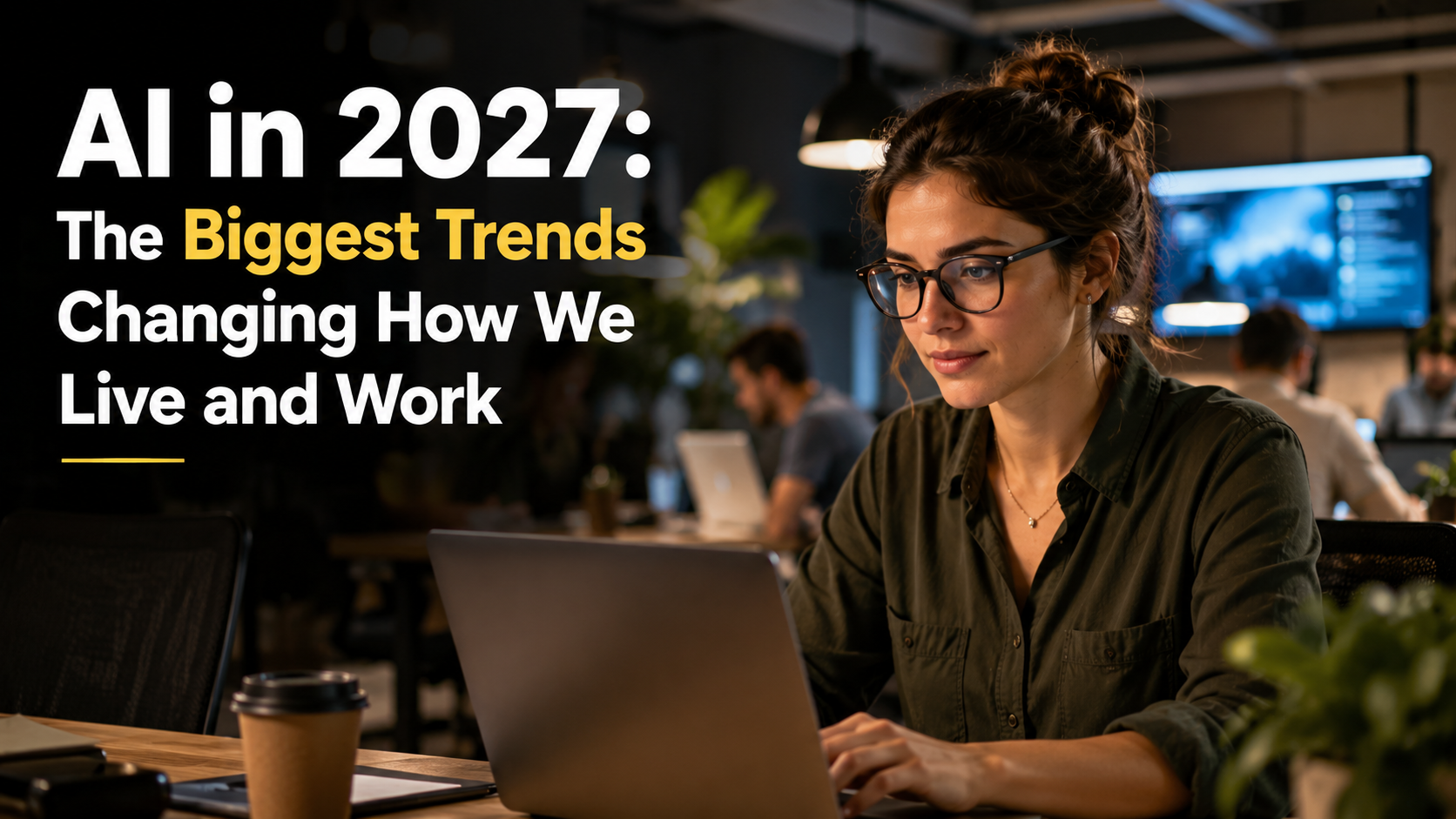
AI Is No Longer Just a Tech Buzzword
A couple of years ago, “artificial intelligence” felt like something out of a science fiction movie. Today, it’s inside your phone, your doctor’s office, your car, and the app you used to order coffee this morning.
2026 is turning out to be the year AI stops being a novelty and starts being infrastructure — the kind of thing that just quietly runs everything.
Whether you’re a student, a small business owner, or just someone who wants to keep up with the world, here’s what’s happening in AI right now, explained without the jargon.
AI Agents Are Doing the Work For You
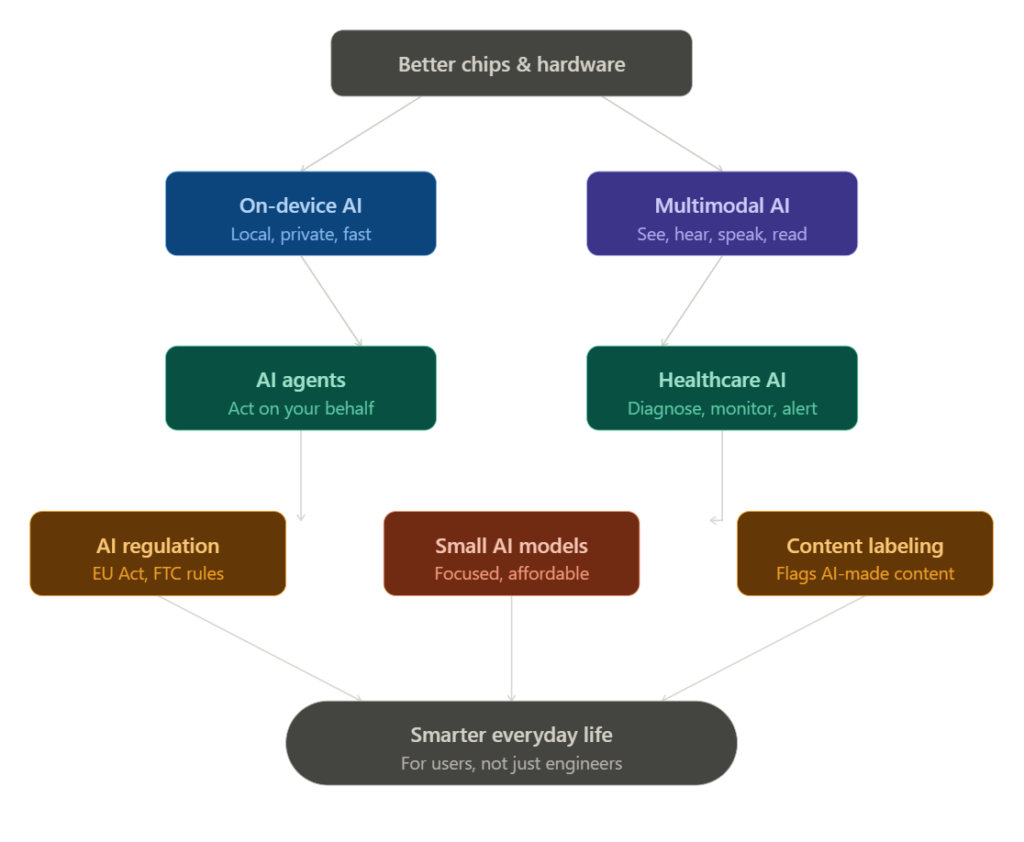
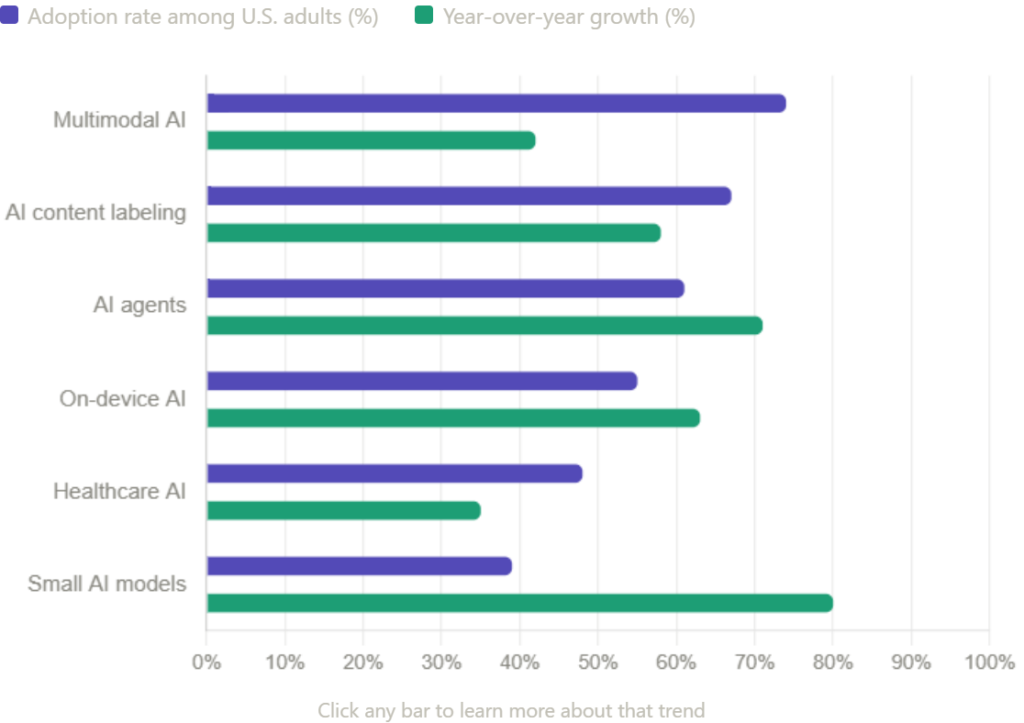
One of the biggest shifts in 2027 is the rise of AI agents — systems that don’t just answer questions but actually take action on your behalf.
Think of it this way: instead of asking an AI “how do I book a flight?”, an AI agent just books the flight for you. It can open your browser, check calendars, compare prices, fill out forms, and confirm a booking — all without you lifting a finger.
Companies like Google, OpenAI, and Anthropic have all released or upgraded their agent platforms this year. And businesses are using them to automate everything from customer support to financial reporting.
For regular users, this means less clicking around and more getting things done.
Multimodal AI Is Going Mainstream
Early AI was mostly about text. You typed, it replied. Simple.
But 2026’s AI can see, hear, and speak. This is called multimodal AI — and it’s now something everyday people are using, not just developers.
You can take a photo of a broken pipe and ask an AI to diagnose the problem. You can upload a PDF and have it summarized out loud. You can describe a room and watch AI generate a 3D interior design mockup in seconds.
Apple’s Siri, Google Gemini, and ChatGPT have all leaned hard into multimodal features, making it feel less like talking to a computer and more like talking to a very capable assistant.
AI Is Entering Healthcare in a Real Way
This one matters more than any other trend because it directly affects people’s lives.
In 2026, AI-powered diagnostic tools are helping doctors catch diseases earlier. AI is analyzing MRI scans, flagging unusual patterns in blood tests, and even predicting potential health risks before symptoms appear.
One example: hospitals across the U.S. are using AI tools that scan patient data in real time and alert nurses to early signs of sepsis — a dangerous condition that moves fast. Early detection has already saved lives.
This doesn’t mean AI is replacing your doctor. It means your doctor has a very powerful second opinion sitting in their pocket.
On-Device AI Is Killing the Cloud Dependency
For a while, AI required massive computing power sitting in a server farm somewhere in Virginia. You’d ask a question, it’d travel to the cloud, get processed, and come back.
In 2026, that’s changing fast. AI is now running directly on devices — your laptop, your phone, even your smartwatch.
Apple’s M-series chips and Qualcomm’s Snapdragon platforms now run sophisticated AI models locally. That means faster responses, no internet required, and — importantly — more privacy. Your data doesn’t have to leave your device at all.
For users in areas with spotty internet or anyone who values privacy, this is a game-changer.
AI Regulation Is Finally Getting Serious
For years, AI development outpaced the laws meant to govern it. That gap is closing in 2026.
The EU’s AI Act is now in full enforcement, classifying AI systems by risk level and requiring transparency from companies. In the U.S., the FTC has been issuing new guidance around AI-generated content, deepfakes, and automated decision-making in hiring.
This doesn’t slow down AI — it means users can start trusting it more. When there are rules, there’s accountability.
AI-Generated Content Is Everywhere — and Getting Labeled
Between AI-written articles, AI-generated images, and synthetic voices, the internet is flooded with content that no human made.
In response, 2026 has seen a big push toward AI content labeling. Google now flags AI-generated search results. Social platforms are testing watermarking systems. News organizations are publishing AI disclosure policies.
The goal isn’t to shame AI content — it’s to make sure readers know what they’re reading. That’s a reasonable ask.
The “Small AI” Movement Is Growing
Here’s a trend that doesn’t get enough attention: not everyone wants a massive AI that knows everything.
Smaller, task-specific AI models — trained to do one thing really well — are becoming popular with businesses and developers in 2026. A law firm might use a model trained specifically on legal documents. A restaurant chain might use one trained only on their menu and customer service data.
These focused models are cheaper to run, easier to control, and often better at their specific job than a general-purpose AI. It’s the difference between hiring a specialist and hiring a generalist.
Why All of This Matters to You
If you’ve been watching AI from the sidelines, now is the time to start paying attention — not because you need to become a tech expert, but because these tools are going to be part of your daily life whether you choose them or not.
Understanding what AI can and can’t do helps you make smarter choices. It helps you ask better questions. And it helps you spot when AI is being used in ways you should care about.
Frequently Asked Questions
Is AI taking over jobs in 2026?
It’s more nuanced than the headlines suggest. AI is automating repetitive tasks — data entry, basic customer service, report generation — but it’s also creating new roles: AI trainers, prompt engineers, AI ethics officers. Most experts say it’s changing jobs more than eliminating them. The safest move is learning how to work alongside AI, not against it.
Do I need to pay for AI tools to benefit?
Not necessarily. Most of the major AI platforms — ChatGPT, Google Gemini, Microsoft Copilot — offer solid free tiers. Paid plans unlock speed, advanced features, and higher usage limits. For most beginners, free is plenty to start.
Is AI safe to use for personal tasks?
Generally yes, with some common sense. Avoid putting sensitive personal information (Social Security numbers, passwords, medical records) into public AI tools. For professional or legal matters, always verify AI-generated output with a qualified human.
How accurate is AI in 2026?
Much better than 2023, but still not perfect. Modern AI makes fewer factual errors and is better at saying “I don’t know.” That said, always double-check important facts — especially in health, legal, or financial contexts.
What’s the easiest AI tool to start with?
ChatGPT is still the most beginner-friendly on-ramp. Go to chat.openai.com, sign up for free, and just start asking questions. You’ll figure it out faster than you think.
Conclusion: AI in 2026 Is Personal
The most important thing about AI in 2026 isn’t the technology — it’s the shift in who it’s for. A few years ago, AI was mostly a tool for engineers and researchers. Now it’s writing your cover letters, helping your doctor catch illness early, driving your car, and booking your dinner reservation.
That’s not scary. That’s useful.
The trends shaping 2026 — agents, multimodal tools, on-device processing, regulation, healthcare breakthroughs — are all converging on the same idea: AI should work for people, quietly and reliably, in the background of life.
The best thing you can do right now? Start using it. Not because everyone else is, but because understanding it gives you a real edge — in your career, your business, your daily routine.
The future isn’t coming. It’s already here. And it responds pretty well to simple questions.
Enjoyed this article? Share it with someone who’s still on the sidelines. More beginner-friendly AI coverage coming soon.