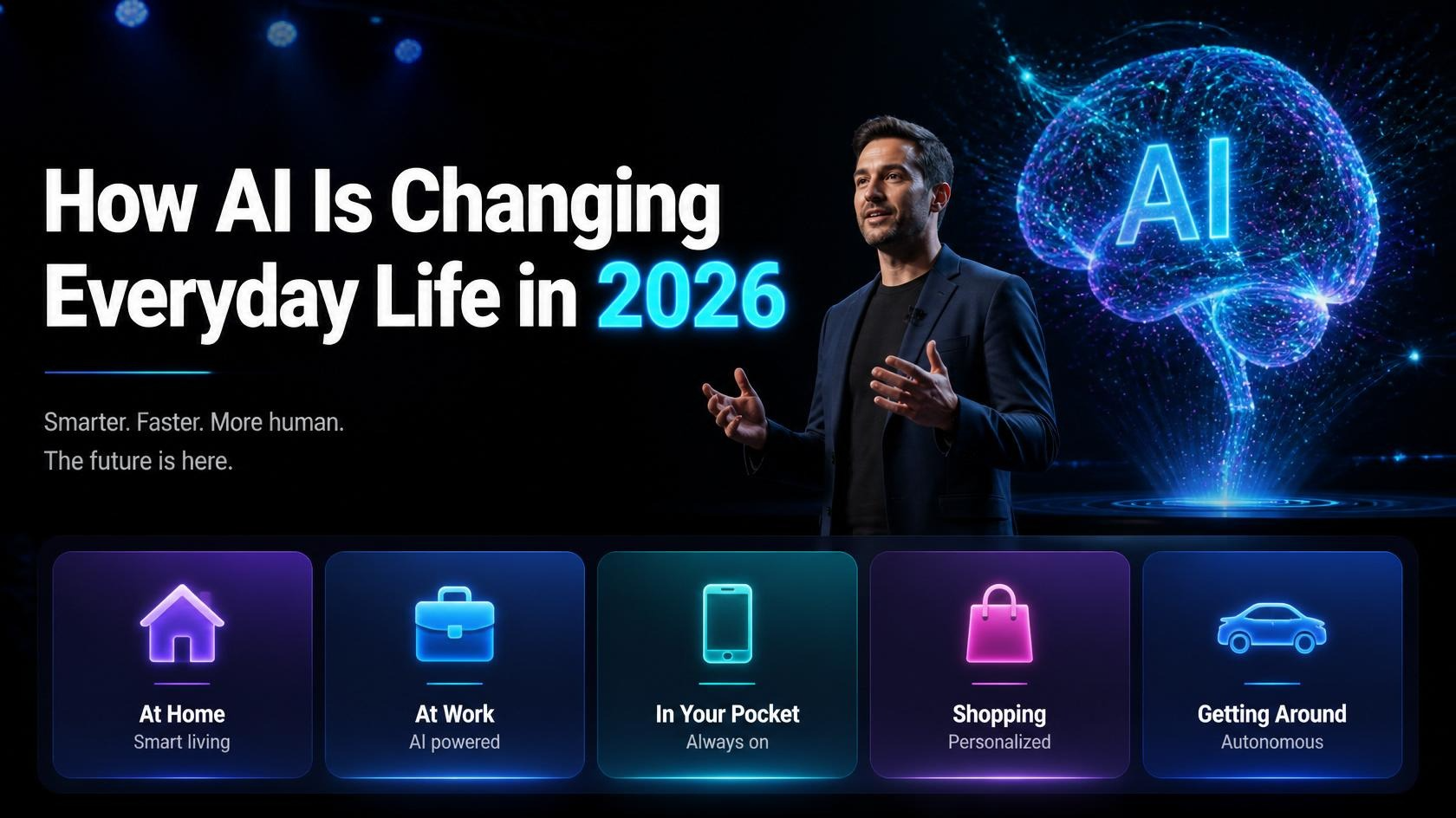
It’s not coming. It’s not “the future.” AI is already woven into the fabric of your Tuesday morning — and most people haven’t even noticed.
We Need to Talk About What’s Actually Happening
Remember when “AI” meant a chess-playing computer or a clunky voice assistant that couldn’t understand your accent? That era feels ancient now.
In 2026, AI isn’t a product you buy or a feature you opt into. It’s infrastructure — invisible, ambient, and deeply embedded in how we work, communicate, shop, get healthy, and move through the world. It’s running in the background of your health insurance app, grading your kid’s essay draft, flagging suspicious charges on your credit card, and quietly optimizing the route your delivery driver took to your door.
This isn’t hype. This is Tuesday.
So let’s take a real, grounded look at exactly how AI is reshaping everyday life right now — the good, the genuinely useful, and the stuff that still deserves a raised eyebrow.
At Home: Your House Got a Lot Smarter
The smart home of 2020 was a novelty. The smart home of 2026 actually works.
AI-powered home systems now don’t just respond to commands — they anticipate. Your thermostat has learned that you like the house cooler when you work from home on Wednesdays. Your fridge notices you’re running low on eggs before you do and adds them to your grocery list. Your sleep tracker doesn’t just log your sleep — it adjusts your bedroom lighting and temperature in real time to improve it.
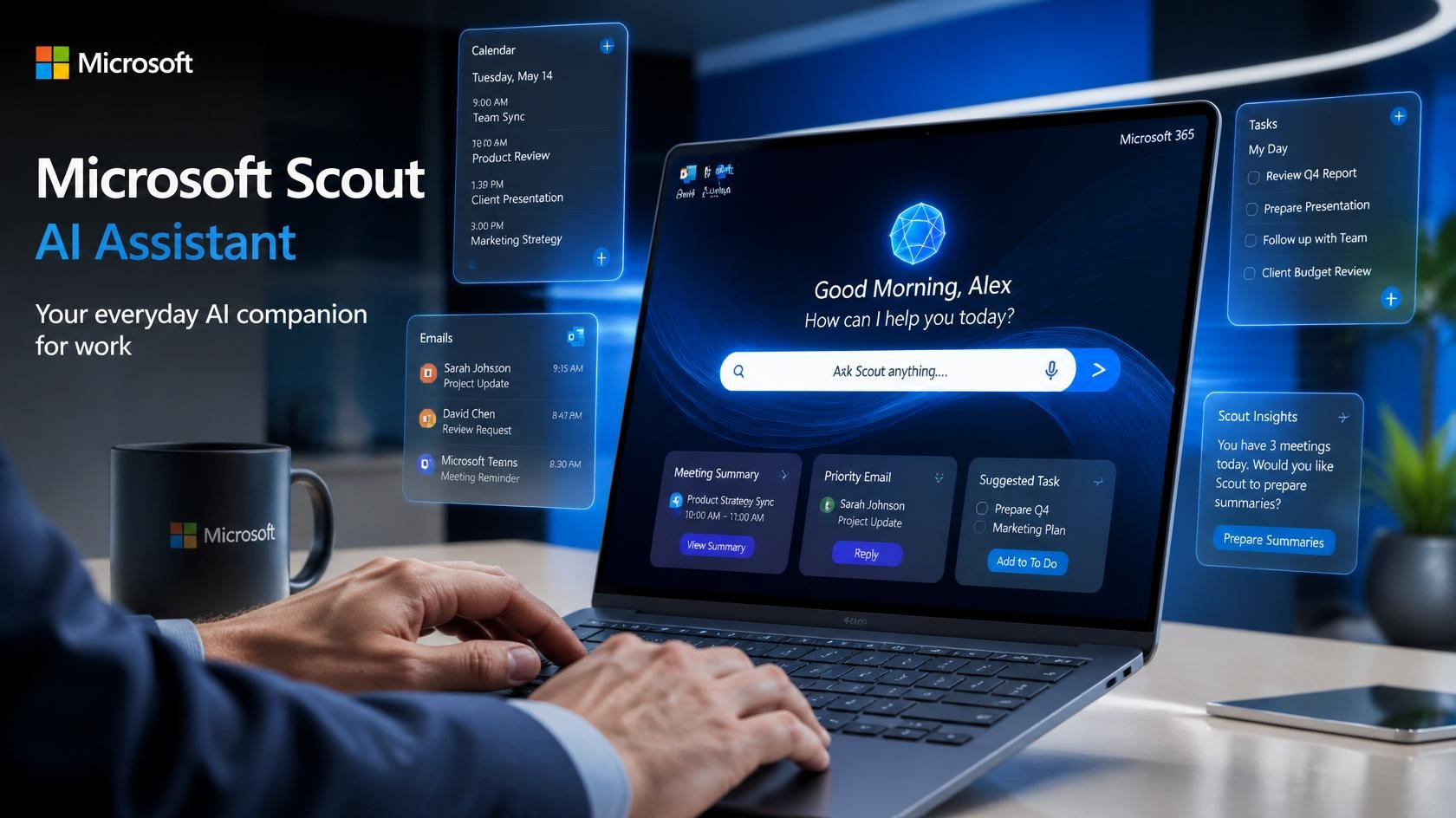
The biggest shift has been in AI home assistants, which have moved far beyond setting timers and playing music. Today’s versions can manage your calendar, summarize your emails while you make coffee, draft quick replies in your voice, and help your kid prep for a history test — all in a natural, back-and-forth conversation that actually follows context.
For seniors and people with disabilities, this has been genuinely life-changing. AI-powered home companions provide reminders for medications, help with video calls to family, and offer real interaction that reduces isolation — without requiring any tech fluency from the user.
At Work: The Colleague That Never Sleeps
The workplace transformation has been the most dramatic — and yes, the most debated.
In 2026, most knowledge workers use AI assistants the way previous generations used email: constantly, and without thinking twice about it. Writers use it to break through first-draft paralysis. Lawyers use it to surface relevant precedents in minutes instead of hours. Customer service teams rely on AI to handle routine inquiries, freeing human agents to handle the complex, emotionally sensitive cases that actually need a person.
Even fields that seemed untouchable have been touched.
Healthcare is seeing some of the most meaningful changes. AI diagnostic tools can now analyze medical imaging — X-rays, MRIs, CT scans — with accuracy that rivals experienced radiologists. Doctors aren’t being replaced; they’re being made faster and more precise. Earlier cancer detection, fewer missed diagnoses, better outcomes.
Education has shifted toward personalized learning at scale. AI tutoring tools adapt in real time to how a student is learning — slowing down when they’re confused, accelerating when they’ve got it, flagging patterns for teachers to address. The classroom teacher hasn’t disappeared; they’ve been freed from grading busywork to focus on the human part of teaching.
Small businesses might be the quiet winners of the AI era. Tools that used to require an agency budget — professional copywriting, data analysis, customer targeting, social media management — are now accessible to a one-person operation running out of their garage.
In Your Pocket: Your Phone Is Now an AI Device
Let’s be direct: your smartphone in 2026 is primarily an AI device that also makes calls.
The camera uses AI to compose and retouch photos in milliseconds. Your keyboard predicts not just words but entire sentences in your style. Your news feed is curated by algorithms that know your reading habits better than you do. Translation is instantaneous and accurate enough for real conversations across language barriers.
The most underrated shift? On-device AI. A few years ago, powerful AI required sending your data to massive cloud servers. Now, much of it runs directly on your phone’s chip — faster, more private, and available even without a signal. Your personal AI assistant can draft that text, summarize that document, or edit that photo without your data ever leaving your device.
For the roughly 5 billion people with smartphones worldwide, that’s a quiet but enormous upgrade in capability.
Getting Around: AI Behind the Wheel (Literally)
Transportation has been one of the most visible AI battlegrounds — and progress has been uneven but real.
In certain U.S. cities, fully autonomous ride services operate without any safety driver. They’re not everywhere, but where they exist, they work. Traffic management systems in major metros now use AI to optimize signal timing in real time, reducing congestion without adding a single new lane of road.
Navigation apps have evolved well beyond turn-by-turn directions. They now predict where you’re going before you type it, reroute around accidents before traffic builds, and factor in your personal schedule to suggest when to leave.
Commercial trucking and logistics have seen some of the deepest AI integration. Route optimization, load planning, predictive maintenance — AI has shaved billions in operating costs and, more importantly, reduced accident rates on long-haul routes.
Shopping and Money: AI Knows What You Want Before You Do
Retail personalization has reached a level that impresses and occasionally unnerves people in equal measure.
The “you might also like” algorithm of 2015 was guesswork compared to what’s running today. Modern AI can predict purchasing intent from browsing behavior, adjust pricing dynamically based on demand, and even anticipate when a loyal customer is at risk of churning — and trigger an offer before they leave.
In personal finance, AI tools have moved from simple budgeting apps to genuine financial coaching. They track your spending patterns, flag subscriptions you forgot about, warn you before you overdraft, and surface refinancing opportunities based on current rates. For millions of Americans who can’t afford a financial advisor, this has been a real democratization of financial guidance.
Fraud detection has become quietly extraordinary. Banks now catch suspicious transactions in milliseconds, often before you’ve noticed anything is wrong.
The Stuff We’re Still Working Through
It would be dishonest to write a piece like this without acknowledging the friction.
The job market is genuinely in transition. Some roles — particularly in data entry, basic content creation, and routine customer service — have contracted significantly. New roles have emerged, but they require different skills, and the transition has not been smooth or equitable for everyone.
Misinformation has become harder to fight. AI-generated text, images, and video are now sophisticated enough that detection requires other AI tools. The information environment is noisier, and the credibility of digital media is under real stress.
Privacy remains a live debate. The more AI optimizes your experience, the more data it needs. Most people have tacitly accepted this trade-off without fully understanding it — and the regulatory landscape is still catching up.
Bias and fairness in AI systems continue to surface in uncomfortable ways — in hiring tools, in lending decisions, in predictive policing. These aren’t theoretical concerns. They affect real people, and solving them requires more than a technical fix.
None of this cancels out the genuine benefits. But it does mean the AI era requires engaged, informed citizens — not just enthusiastic users.
The Upgrade Is Already Running
Here’s what’s easy to miss when AI change happens gradually: by the time you notice it, it’s already normal.
The AI tools reshaping life in 2026 aren’t science fiction anymore — they’re just Tuesday. They’re in your commute, your kitchen, your doctor’s office, your kid’s classroom, and your bank account. Most of the time, they’re making things meaningfully better. Sometimes they’re raising questions we haven’t fully answered.
The smartest thing you can do isn’t to be afraid of AI or blindly enthusiastic about it. It’s to understand it well enough to use it intentionally — to know when to lean on it, when to push back on it, and when to demand better from the people building it.
The future isn’t coming. It’s already running in the background. Might as well know how it works.
FAQ: Your Real Questions About AI in 2026, Answered
Q: Is AI actually improving people’s lives, or is it just hype?
Both exist. For specific, concrete applications — medical diagnostics, translation, accessibility tools, personalized education — the improvements are real and measurable. The hype tends to cluster around broader claims about AI “solving” complex human problems. The honest answer: transformative in narrow applications, still overpromised in broad ones.
Q: Should I be worried about AI taking my job?
Some jobs have changed significantly; others have been created. The pattern is consistent with past technological shifts — disruption is real, but so is adaptation. The best hedge: learn to work with AI tools in your field rather than waiting to see what happens.
Q: Is the AI on my phone spying on me?
Modern phones increasingly use on-device AI, meaning data stays local. That said, many apps do send data to cloud servers for processing. Reading privacy policies (or using tools that summarize them — yes, AI can do that too) is more important than ever.
Q: How do I know when to trust AI and when not to?
A useful rule: trust AI for tasks where errors are low-stakes and easy to verify (drafting text, summarizing documents, generating ideas). Be more cautious when stakes are high — medical decisions, legal advice, financial moves. Always verify outputs that matter.
Q: Do I need to learn to code or study AI to keep up?
No. AI literacy — understanding what AI can do, what it can’t, and how to use it thoughtfully — matters far more than technical skills for most people. The tools themselves are increasingly designed for anyone.
Q: What’s the single biggest AI change most people haven’t noticed yet?
Probably on-device AI. The fact that sophisticated AI processing now happens entirely on your phone chip — privately, instantly, offline — is a bigger deal than most headlines give it credit for.
Know someone who still thinks AI is just robots and movie villains? Send them this. It might just change their Tuesday.