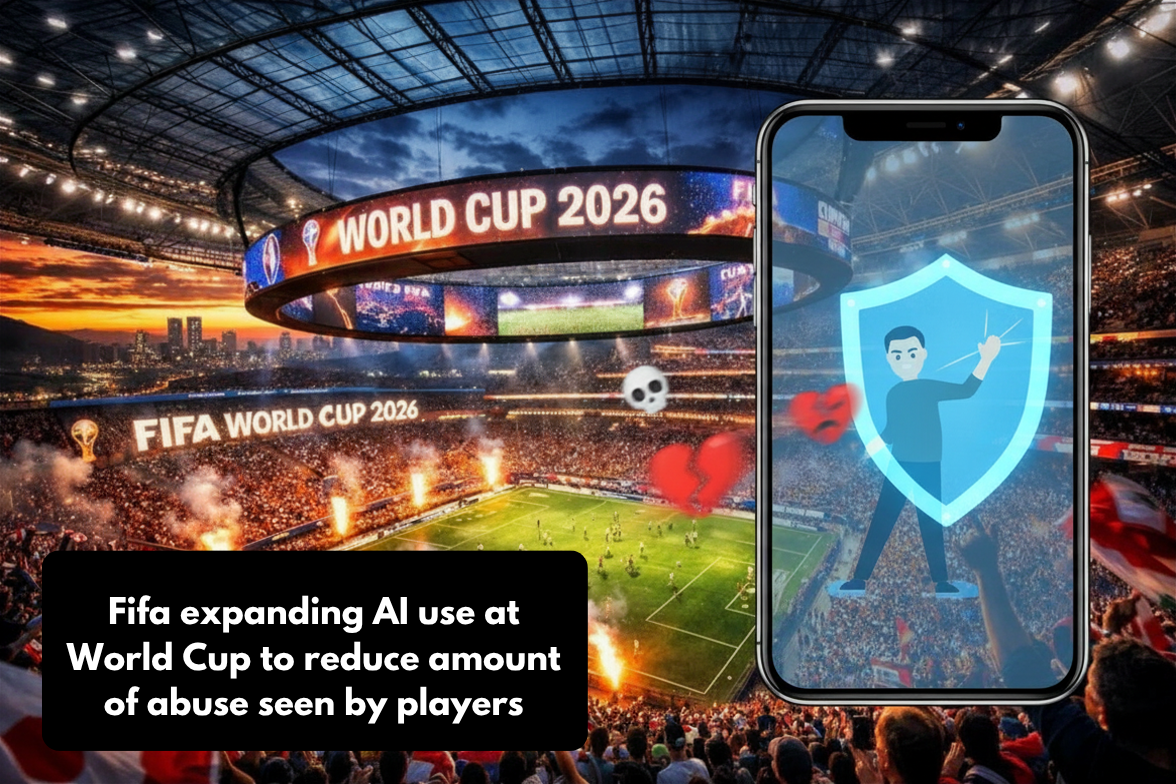
With the 2026 World Cup just days away and online abuse expected to spike, an AI moderation system is quietly scrubbing racist, homophobic, and threatening comments before players ever see them.
FIFA is expanding its use of artificial intelligence to detect and suppress abusive content directed at national teams and players across social media — and doing it before the athletes ever have to see a single hateful comment.
why this technology exists at all
This effort didn’t start in a boardroom. It started with rage on the internet. Back in 2019, professional tennis player Serena Williams shared a photo of her newborn daughter on Facebook. What followed was a torrent of racist and sexist abuse that shocked observers and advertisers alike. That backlash, ugly as it was, became the founding story of Respondology — the AI platform that now sits at the heart of this World Cup initiative.
The company’s trajectory accelerated sharply after Euro 2020, when England footballers Bukayo Saka, Marcus Rashford, and Jadon Sancho were subjected to vicious racial abuse after missing penalties in the final. The incident drew global condemnation and made it undeniable that social media platforms weren’t doing enough to protect public figures — especially athletes — from coordinated online hate.
“We estimate we’ve removed 1.5 billion hateful impressions from global football — and that’s probably a conservative number. Fifteen million racist and homophobic comments. And if you think about how often each comment is seen, a hundred views per comment is a low estimate.”
— Erik Swain, Co-Founder & CEO, Respondology
Fifa expanding AI use at World Cup to reduce amount of abuse seen by players
How the AI actually works — and why it’s fast
Speed matters here. Online abuse spreads fast, and even a few minutes of exposure can be damaging. FIFA’s AI-powered social media protection service filters content against a bank of more than 30,000 keywords and phrases — covering slurs, threats, and coded hate speech across dozens of languages — and hides offending comments in under two seconds.
Here’s the clever part: the person who posted the abuse still sees their own comment on their screen. They have no idea it’s been hidden from everyone else. In the meantime, the content is logged and flagged for further review, and repeat offenders can face bans from purchasing FIFA match tickets or be blocked by clubs entirely.
- Step 1
- Comment posted on social media
- Step 2
- AI scans against 30,000+ keywords in <2 seconds
- Step 3
- Abusive content hidden — sender unaware
- Step 4
- Flagged for review; bans issued if needed
The system works across Meta’s platforms (Facebook, Instagram, Threads), YouTube, and TikTok. The one notable exception is X (formerly Twitter), which has long allowed third-party systems to see hidden comments — making the moderation loop ineffective there. That gap is a meaningful limitation, especially given how much sports discourse happens on that platform.
Why this matters more than ever at the 2026 World Cup
The 2026 tournament is being hosted across the United States, Canada, and Mexico — and that geographic context matters enormously for the abuse problem. Sports betting is now legal in the vast majority of U.S. states, which means millions of people will have financial stakes riding on individual player performances. History shows that bettors who lose money often direct their anger at the athletes they blame — and social media is the most accessible outlet for that rage.
30K+
Keywords the AI monitors
<2s
Time to hide abusive content
15M+
Racist & homophobic comments removed from football
1.5B
Estimated hateful impressions blocked
Beyond betting, the sheer scale of the World Cup audience amplifies everything. Players at club level might have tens of millions of followers. International superstars can have audiences in the hundreds of millions. A single high-profile mistake — a missed penalty, an own goal, a red card — can trigger an avalanche of abuse that would take a human moderation team days to address.
The mental health angle is real: Research consistently shows that exposure to online abuse affects athletes’ mental performance, sleep, and psychological wellbeing. The World Cup’s high-pressure environment makes that vulnerability even more acute. Protecting a player’s digital environment isn’t just optics — it’s performance management.
Who’s already using this tech — and who should be paying attention
Respondology’s client list reads like a who’s-who of major sports and entertainment. In the Premier League, both Arsenal and Tottenham Hotspur have partnered with the platform to filter abusive content from their official channels. Arsenal’s approach offers a useful model: criticism of the team or players is explicitly permitted, but anything that would get a fan removed from the stadium for shouting it is filtered out digitally. Same stadium rules, different medium.
Manchester United introduced a formal social media code of conduct in 2024, and according to Respondology’s CEO, every Premier League club is expected to adopt similar policies within the next one to two years. Beyond football, the company works with NFL teams, NASCAR, and commercial brands including major UK retailers.
The technology is also explicitly multilingual — it processes every language currently in use on Earth. According to Swain, the team even tested it against Morse code and Klingon. That kind of stress-testing matters, because bad actors online are creative: they use coded language, foreign scripts, and deliberate misspellings to evade basic keyword filters. This system is built to handle that.
The platform problem: why companies like Meta won’t just fix this themselves
A fair question is: why doesn’t Instagram or TikTok just build this moderation in natively? The answer, according to Swain, is philosophical rather than technical. Major social platforms have consistently positioned themselves as neutral infrastructure — pipelines for speech rather than publishers responsible for its content. That framing lets them avoid direct liability, but it also means they’ve largely outsourced content moderation to third-party developers through open APIs.
That dynamic has created a market for companies like Respondology, which plug into those APIs and do the work the platforms won’t. It’s a functional solution, but it also means protection is uneven: only teams, athletes, and organizations that can afford or seek out these services actually get it. Smaller sports leagues, individual players without major backing, and athletes in developing nations may have no coverage at all.Learn more about Respondology’s moderation platform
What comes next: scaling this protection globally
FIFA’s decision to offer its social media protection service free of charge to all national football associations at the 2026 tournament is a meaningful step — but it’s worth noting that uptake isn’t mandatory. Some associations may decline, leaving their players unprotected. The English Football Association, notably, hasn’t confirmed whether it’s taking up the offer.
Looking ahead, the bigger question is whether FIFA’s approach becomes a template for other major sporting organizations, and whether pressure mounts on social platforms to incorporate this kind of protection natively rather than leaving it to third parties.
There’s also a broader societal conversation here. If the technology exists to filter out hate speech at scale in under two seconds — and it does — then the persistence of this problem is increasingly a choice, not a technical limitation. That’s a harder conversation to have, but the World Cup may be the moment it becomes unavoidable.
FIFA 2026 World Cup official site